A roofing call-flow checklist for crews in the field
A useful roofing call flow begins before the phone rings: with the job details, inspection path, and handoff moments the contractor wants the first conversation to cover.
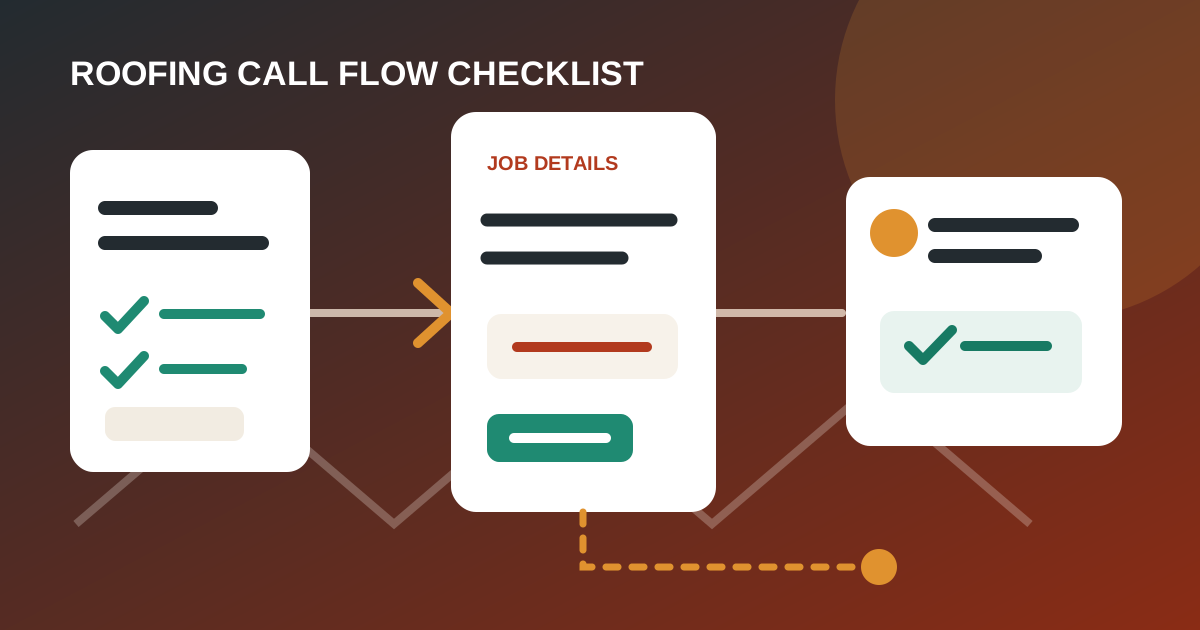
When crews are in the field, the first roofing call needs a path that reflects how the business actually works. The goal is not to turn an inbound conversation into a job decision. It is to agree on the details that help the contractor understand the request and choose a useful next step.
Start with the calls the team expects
List the familiar reasons a homeowner may call: a question about the service, a property concern, an inspection request, or a need that should reach someone on the team. The categories should match the contractor’s own operation, not a generic reception script.
- the caller’s reason for reaching out;
- the property or job detail the team needs to understand next;
- the approved question or common-answer path; and
- the point at which a person should review the conversation.
Make the inspection path clear
An inspection request has a different next action from a general question. Define what the first conversation should gather, what an inspection path should make clear, and where the contractor wants a human to decide the next move. The business remains responsible for the actual job and scheduling decision.
A call flow is most useful when the crew can see why the caller reached out before deciding where the request goes.
Keep common questions separate from job review
Some calls can follow a straightforward approved answer path. Others need context that only a person can weigh. Separating those routes lets the first conversation stay practical: it can share the next step the contractor has defined without presenting a general answer as a substitute for job review.
Give unclear calls a visible handoff
Not every homeowner request will fit the usual choices. Set out how an unclear or unusual call reaches the appropriate person, and make sure the job context already gathered travels with it. That keeps the transition understandable for the caller and gives the crew a useful place to begin.
Roofing Lead Data is built around contractor-defined intake, inspection requests, and human handoffs. Review how the call flow works, read the roofing call FAQ, or map the next step for your inbound calls.