How to set up a storm-call intake path for roofing crews
When weather brings more calls, a clear intake path helps the team distinguish a standard inspection request from a call that needs a person.
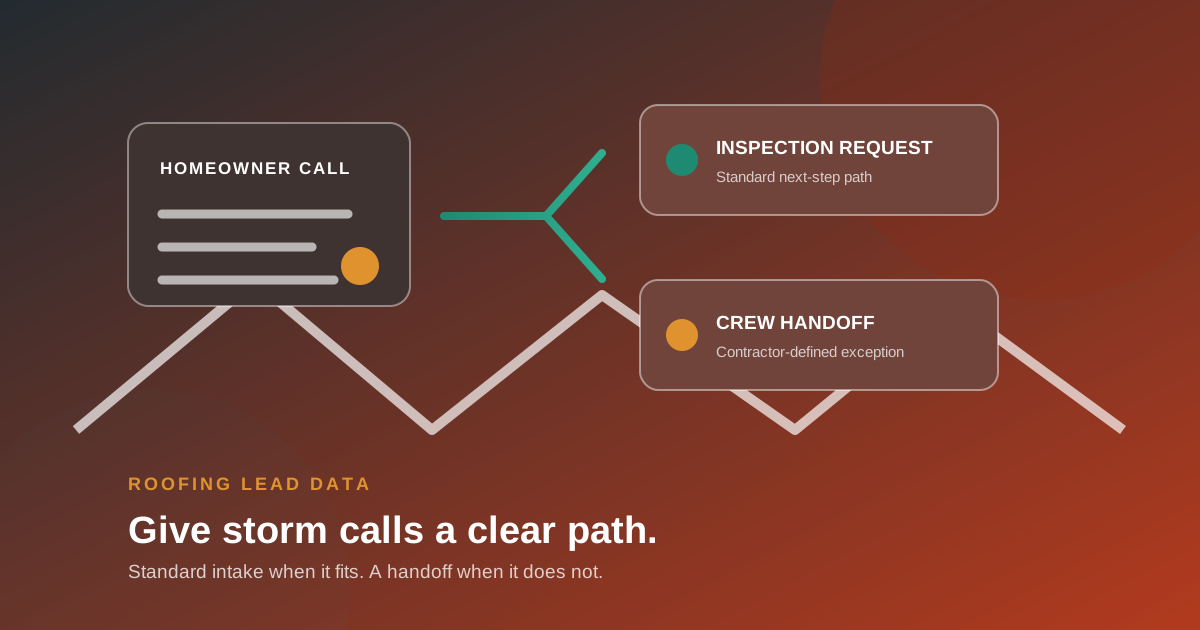
When weather brings more homeowner calls, the challenge is not simply getting a message down. Crews need a repeatable first path that gathers the right job context, explains the next step the business has approved, and makes it clear when a call should move to a person.
Define the standard inspection-request path
Start with the calls a contractor wants to handle consistently. That path can establish the property location, the homeowner’s reason for calling, and the roof or exterior details that help the team understand the request. It can then follow the business’s chosen inspection or estimate-request process without making a promise about timing, coverage, or job outcome.
- Capture the property and caller details the team needs
- Ask the approved questions about the homeowner’s concern
- Explain the inspection-request or next-contact path clearly
- Preserve the details for the crew or office to review
Decide which calls leave the standard path
Not every roofing conversation belongs in the same intake. A caller may have a question outside the usual path, need a conversation with the office, or describe a situation the contractor wants a person to review. Those conditions should be defined by the business in advance so the inbound flow can hand off with context instead of treating every call as identical.
A storm-call path is not a promise about the job. It is a clear way to move each homeowner toward the right next conversation.
Keep crews focused on the field work
A useful intake path lets crews stay focused while the business keeps a consistent front line for new calls. The team still owns the inspection decision, the customer conversation, and the work that follows. The value is a cleaner starting point when the office or crew is ready to act.
Roofing Lead Data is built around contractor-defined intake, inspection requests, and human handoffs. Review how the call flow works, read the roofing call FAQ, or map your storm-call path.