When a homeowner calls back about an open roofing request
A second call should add context, not create a second promise.
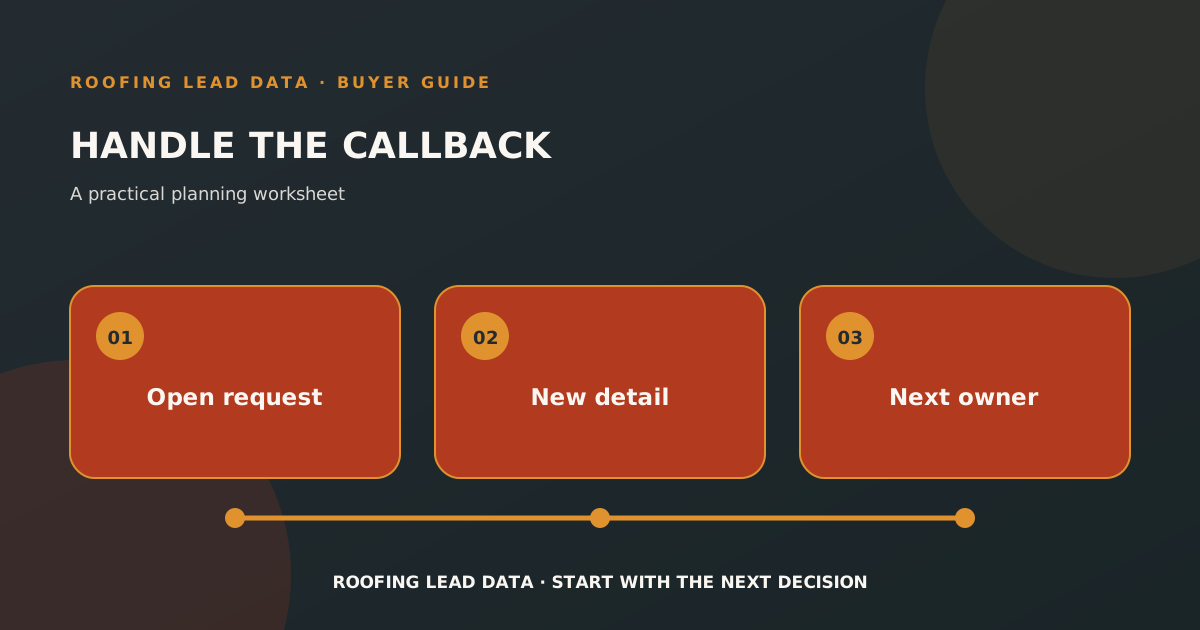
When a homeowner calls back, first identify the earlier request, then ask what has changed. Do not turn the repeat call into a new inspection booking or claim a crew has reviewed the property unless that is actually confirmed. This is an office-side conversation guide, not a claim about an automated record match or scheduling feature.
Anchor the call to the original question
Ask for enough context to help your team locate the request through its normal process: caller name, property or job reference if appropriate, and the original reason for contacting the company. Avoid reading back private details before the caller's identity is handled under your own policy. Then ask one useful question: “What are you calling back to add or change?”
Illustrative: A homeowner requested an inspection and calls again after noticing a new leak. The new detail belongs with the open request. It does not prove the cause of the leak, qualify an insurance claim, or establish an appointment time.
| Earlier request | What changed | What is confirmed | Next owner |
|---|---|---|---|
| A reference your office can find | New observation or corrected contact detail | Only a fact your team has checked | Named office or field role |
Separate a status update from a promise
If the homeowner asks when someone will arrive, use only the availability your business has actually confirmed. “The office will review the new detail” is different from “an inspection is booked.” The first-request guide helps keep a new lead separate from an existing job; the crew handoff note shows the kind of context a field team may need.
End by telling the caller what information was captured and who owns the next step, within your actual process. If your roofing business wants to map repeat calls as well as first requests, contact Roofing Lead Data.