Try the examples
Start with the homeowner’s question.
Each example produces a practical result and makes the limits clear. A contractor could adapt the questions, service area, scheduling rules, and follow-up to its own business.
New · Playable example
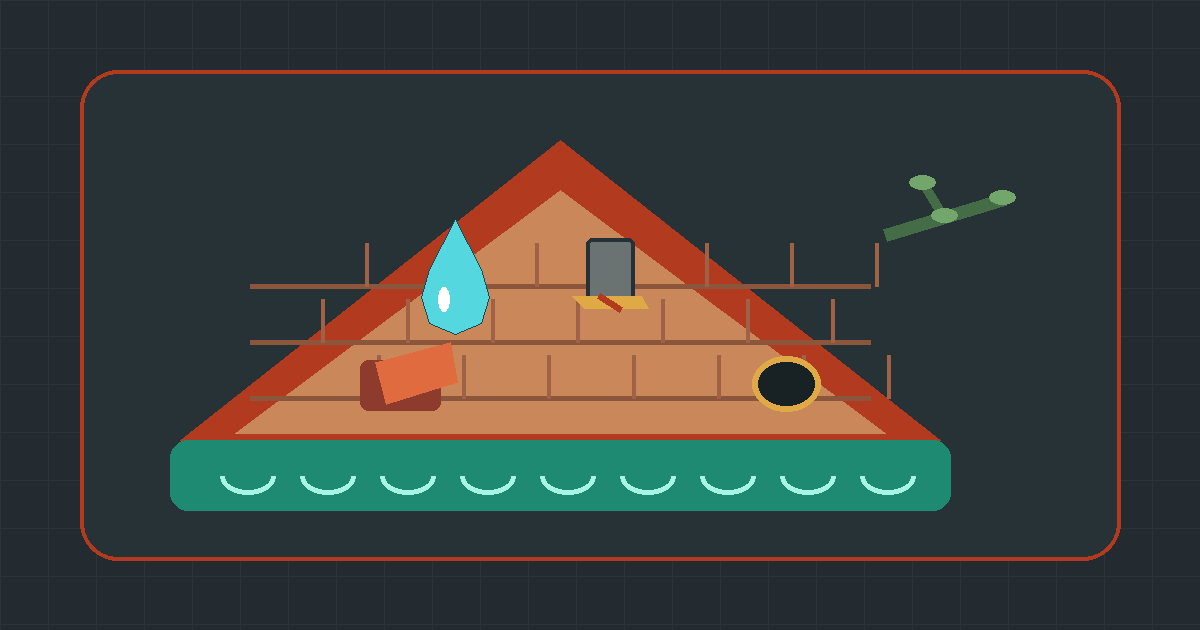
Raindrop Roof Run
Be the raindrop. Cross three cartoon roofs, dodge common trouble spots, and reach the gutter. Play with keys, touch buttons, or swipes; no roof is assessed.
Play the game →Post-Storm Inspection Request Builder
Describe what you can see safely, then preview the kind of structured summary a roofing crew could receive. This demo does not send a request or book an inspection.
02 · CUSTOMER EXAMPLERoof Inspection Preparation Checklist
Answer a few questions about the concern and leave with a tailored list of what to have ready and what to ask before an actual inspection.
03 · CUSTOMER EXAMPLERoofing Estimate Comparison Worksheet
Place two written estimates side by side and surface missing scope, material, timing, warranty, and payment details before choosing a contractor.
04 · CUSTOMER EXAMPLERepair or Replacement Conversation Guide
Use roof history and your priorities to prepare a focused discussion about repair and replacement options, without a remote diagnosis.
05 · CUSTOMER EXAMPLEStorm-Damage Documentation Organizer
Build a simple record of observed areas, photos, temporary work, and insurer conversations after a storm.
More ways to explore
Learn the parts, try a look, and bring better questions.
These six activities add visual learning and short quizzes to the five planning tools above. Each runs in the browser and makes no service request.
Roof Anatomy Explorer
Tap roof parts to learn their names and a useful question for a contractor.
07 · QUIZStorm-Ready Challenge
Answer five preparation questions and see explanations with primary sources.
08 · QUIZRoof Project Priorities Quiz
Choose two priorities and build a focused question list without a material recommendation.
09 · VISUAL ACTIVITYSample Roof Color & Style Visualizer
Try generic colors and drawn styles on a sample house, then discuss real materials.
10 · INTERACTIVE GLOSSARYRoofing Terms Decoder
Search proposal terms and collect questions for a roofer.
11 · VISUAL ACTIVITYRainwater Path Explorer
Follow water from the roof edge through the gutter and downspout.
Plan and keep track
Prepare for the project beyond the first call.
These seven examples help homeowners organize records, discuss the work, and understand choices. Each stays in the browser and makes no service request.
Roof Project Day Planner
Build a printable list of access, people, property, and cleanup questions for the workday.
13 · CUSTOMER EXAMPLERoof History Organizer
Create a temporary, printable timeline of roof work and records without uploading details.
14 · CUSTOMER EXAMPLEAttic Clue Explorer
Turn safe indoor and ground-level observations into questions, without a diagnosis.
15 · CUSTOMER EXAMPLERoof and Solar Coordination Guide
Coordinate roof condition, project timing, penetrations, and responsibility questions.
16 · CUSTOMER EXAMPLECool Roof Choice Guide
Explore reflectance, climate tradeoffs, and questions about real products.
17 · CUSTOMER EXAMPLERoof Project Scope Spotter
Find missing details in a fictional proposal and learn what to clarify.
18 · CUSTOMER EXAMPLERoof Replacement Sequence Explorer
Explore common project stages and build questions for the contractor.
How these connect to Roofing Lead Data
Roofing Lead Data focuses on inbound calls for roofing and exterior contractors. These browser demos show the kind of structured questions and handoff context a contractor might choose to use. They are examples of customer education and intake design; they are not a claim that every browser field is connected to the phone agent.
For contractor-side planning, see the Storm Intake Readiness Assessment and Storm Week Call Gap Estimator.
Design the real call path around your crew.
Bring your service area, inspection rules, common questions, and escalation preferences. We can talk through the caller experience and what your team needs after each call.
Discuss your call flow →